
Sale!
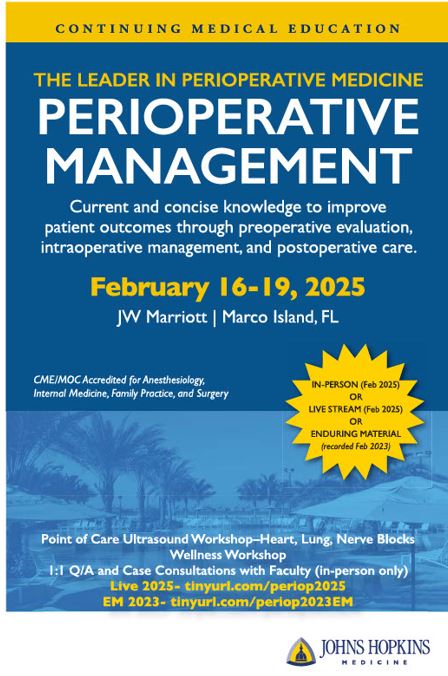
Johns Hopkins Perioperative Management-In Its 40th Year 2025
$ 90.00
Description Include: 4 videos 56 pdfs, size: 17 GB Target Audience: anesthesiologists, critical care physicians, internists, family medicine physicians, orthopedic surgeons, hospitalists, urologists, pain medicine specialists Sample video: contact me for sample video Information: Date & Location: Sunday, February 16, 2025, 7:00 AM – Wednesday, February 19, 2025, 1:30 PM, Marco Island Marriott, Marco Island, FL Target Audience Specialties – Anesthesiology, Critical Care Medicine, Family Practice, General Surgery, Hospitalist, Internal Medicine, Nurse Anesthetist, Nurse Practitioner, Orthopedic Surgery, Pain Medicine, Physician Assistant, Urology Overview Over 300 million patients undergo surgical procedures worldwide, and the age and medical complexity of this patient population continues to increase. Higher risk patients are now having surgery in ambulatory and non-OR settings. All these patients require preoperative assessment, intraoperative management, and postoperative care. Every year the body of peer-reviewed literature on this topic increases and new guidelines on clinical management are formulated. The curriculum for this course was specifically created to address the needs of clinicians who provide care for patients before, during, and after surgery based on examination of the evidence-based peer-reviewed literature, recent research, feedback from course participants, and input from expert colleagues inside and outside Johns Hopkins. As the established leader in perioperative medicine, this course aims to provide practitioners with the most up-to-date knowledge necessary to deliver effective, evidence-based care by affecting healthcare practices at the level of the individual and the larger health system. Objectives Describe current guidelines for preoperative cardiac and pulmonary risk assessment and list several ways to predict and prevent cardiac and pulmonary complications using preoperative testing and intraoperative and postoperative interventions. Recognize the risks of perioperative anemia and transfusion as well as the risks and benefits of perioperative anti-thrombotic therapies, and list several strategies to reduce bleeding and thrombotic complications through evidence-based approaches to anemia management, transfusion, coagulation testing, and pharmacologic interventions with anti-thrombotic and anti-fibrinolytic agents. Describe the perioperative complications associated with diabetes, renal insufficiency, liver disease, delirium, and frailty, and list current management strategies to optimize outcomes in patients with these medical conditions. Describe strategies to control acute postoperative pain, including in patients who chronically use opioids or cannabis. Recognize how to prevent, diagnose, and treat common healthcare associated infections that complicate surgical procedures. Recognize the perioperative implications of the growing use of newer pharmacologic therapies for diabetes, obesity, heart failure, and immunomodulators and the pros/cons of emerging physiologic monitoring technologies for use in the OR, PACU, and wards. Recognize the impact of burnout, and its relation to gender, race, and micro-aggressions, on clinician wellbeing and patient safety, and describe strategies to improve work-force wellbeing, communication, and the quality/safety of clinical care for of individual healthcare worker, patients, and the health system. Recognize basic views for real-time ultrasound guided vascular access and perform vascular access on simulation equipment using ultrasound (optional POCUS Workshop). Recognize and interpret basic transthoracic ultrasound views of cardiac and lung structures (optional POCUS Workshop). Apply basic ultrasound algorithms to diagnose and manage an unstable perioperative patient (optional POCUS Workshop). Recognize and interpret ultrasound views of peripheral nerve structures and how ultrasound can facilitate performance of peripheral nerve blocks for upper and lower extremity surgery (optional POCUS Workshop). Recognize the causal role of gratitude in well-being (optional Wellness Workshop). Perform a brief gratitude intervention in real time (optional Wellness Workshop). List several wellbeing improvements associated with awe and wonder interventions (optional Wellness Workshop). Perform a brief awe intervention in real time (optional Wellness Workshop). The Johns Hopkins Perioperative Management—In Its 40th Year (2025) course is designed for physicians and healthcare professionals involved in perioperative care, surgery, and anesthesia. This course is particularly beneficial for: Anesthesiologists managing perioperative pain and sedation. Critical Care Physicians overseeing high-risk surgical patients. Family Medicine & Internal Medicine Physicians involved in preoperative assessments. General & Orthopedic Surgeons optimizing surgical outcomes. Hospitalists & Physician Assistants coordinating perioperative care. Nurse Anesthetists & Nurse Practitioners supporting surgical teams. Urologists & Pain Medicine Specialists addressing surgical complications. The program covers preoperative assessment, intraoperative management, and postoperative care, ensuring participants stay updated on evidence-based perioperative practices Topics: February 16, 2025.mp4 (5 hours) February 17, 2025.mp4 (5 hours 30 minutes) February 18, 2025.mp4 (5 hours 30 minutes) February 19, 2025.mp4 (5 hours) Acute Pain Management- Limiting Narcotics through Multimodal Analgesia.pdf Burnout and the Role of Gender, Race, and Micro-aggressions.pdf Case-Based Perioperative Care of the Patient with Diabetes- Hyperglycemia.pdf Continuous Physiologic Monitoring Outside the OR- Why, which one, where, and for whom-.pdf Controversial Debates-.pdf ERAS for Ambulatory Surgery.pdf Frailty- Measurement and Management to Optimize Perioperative Outcomes.pdf Gratitude as Easy Well-Being- New Science on an Old Practice (Optional Wellness Workshop).pdf Identifying and Managing Risks in Ambulatory Surgery Patients.pdf Improving Perioperative Quality and Safety through System and Culture Change.pdf Improving the Quality of Sepsis Care.pdf Incidence, Implications, and Management of Postoperative Atrial Fibrillation.pdf Looking into the future- anesthesia workforce trends.pdf Main program 2025.pdf Management of Perioperative Anemia, Transfusion, and Bleeding.pdf Managing End of Life Care in Surgical Patients.pdf Managing the Difficulty Airway- Updated ASA Guidelines.pdf New Monitoring Devices for the OR- Neurologic, Hemodynamic, and more.pdf Perioperative BP Management- The Case for Precision Medicine-.pdf Perioperative Considerations of COVID.pdf Perioperative DVT and Pulmonary Embolism.pdf Perioperative Fluid Management.pdf Perioperative Management of Cannabis.pdf Perioperative Management of Diabetes and Hyperglycemia.pdf Perioperative Management of Hepatic Dysfunction.pdf Perioperative Management of Hyponatremia and Other Electrolyte Abnormalities.pdf Perioperative Management of Immune Modulating Medications- Steroids, Biologicals, and Check Point Inhibitors.pdf Perioperative Management of Patients on Anti-Platelet Therapy.pdf Perioperative Management of Patients on Warfarin and Direct Oral Anticoagulants (DOACs).pdf Perioperative Management of Patients with Cardiomyopathy.pdf Perioperative Management of the Patient with a Pacemaker or ICD.pdf Perioperative Management of the Patient with Chronic Opioid Use Disorder- Methadone, Buprenorphine, and more.pdf Perioperative Management of the Patient with Obstructive Sleep Apnea.pdf Perioperative Management of the Patient with Pulmonary Hypertension.pdf Perioperative Management of the Pregnant Patient for Non-Obstetrical surgery.pdf Perioperative Renal Dysfunction.pdf Perioperative Respiratory Insufficiency- Mechanisms and Management.pdf POCUS workshop 2025.pdf Post-Operative Delirium- Prevention and Treatment.pdf Practical Interpretation and Perioperative Implications of an ECHO Report.pdf Preoperative Cardiac Risk Assessment and Testing.pdf Preoperative Evaluation and Management of the Patient with Heart Failure.pdf Preoperative Evaluation- Optimized, Not Cleared.pdf Preoperative Lab Testing- Choosing Wisely.pdf Preoperative Management of the Patient with “New ECG Abnormalities”.pdf Preoperative Pulmonary Risk Assessment and Testing.pdf Preventing, Identifying, and Managing Common Healthcare Associated Infections.pdf Prevention and Treatment of Perioperative Myocardial Injury.pdf Prevention and Treatment of Surgical Site Infections.pdf Programs to Enhance Recovery after Surgery (ERAS).pdf Resolving Common Perioperative Conundrums- The Role of Point of Care Ultrasound (POCUS).pdf Science of Wow- Cultivating Awe and Wonder as a Well-Being Strategy (Optional Wellness Workshop).pdf Welcome and Conference Goals.pdf Wellness workshop 2025.pdf Work-Life Integration- Measuring & Understanding Health Care Worker Well-Being.pdf “It’s only a sedation case.”- Strategies to Prevent a Cardiopulmonary Catastrophe.pdf
Related products
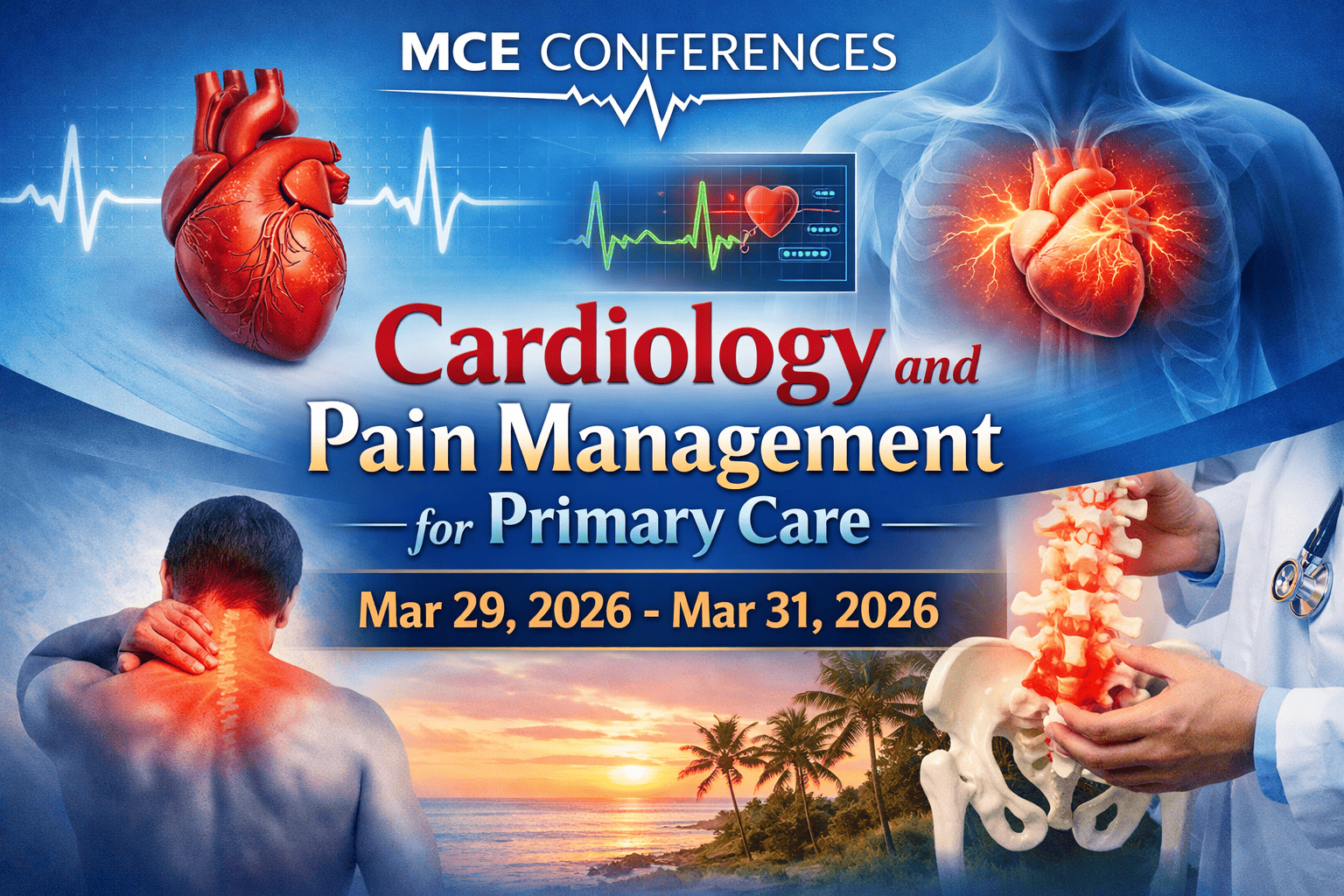 MCE Conferences Cardiology and Pain Management for Primary Care Mar 29, 2026 – Mar 31, 2026
 Houston Methodist Updates in Interventional Pain Management Symposium 2025
 Harvard 39th Annual Evaluation and Treatment of Pain Conference 2025
 Medical Education Resources Internal Medicine for Primary Care Cardiology Neurology Pain Management Vascular Medicine 2025
-
 Cedars Sinai 10th Annual New Therapeutics in Oncology 2021
-
 Global Migraine & Pain Summit 6th Mena Meeting & 4th Turkish African Meeting of Headache and Pain Management 2022
-
 Harvard Anesthesiology Update 2025
-
 MedStar Health New Developments in Understanding Chronic Illnesses 2023
-
 Continuing Education Company 15th Annual Essentials in Primary Care Fall Conference – Session I 2024
-
 McMaster University 14th Annual McMaster Pain Program 2021